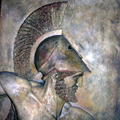
Biography

[Caesar again at Rome.] [Combinations against him.] [Veni, vidi, vici.]

Caesar's greatness and glory came at last to a very sudden and violent end. He was assassinated. All the attendant circumstances of this deed, too, were of the most extraordinary character, and thus the dramatic interest which adorns all parts of the great conqueror's history marks strikingly its end.

[Jealousies awakened by Caesar's power.] [The Roman Constitution.] [Struggles and Conflicts.]

[Caesar receives many warnings of his approaching fate.]

[Three great European nations of antiquity.]

There were three great European nations in ancient days, each of which furnished history with a hero: the Greeks, the Carthaginians, and the Romans.

[Alexander.]

[Caesar's resolution.]

Caesar does not seem to have been much disheartened and depressed by his misfortunes. He possessed in his early life more than the usual share of buoyancy and light-heartedness of youth, and he went away from Rome to enter, perhaps, upon years of exile and wandering, with a determination to face boldly and to brave the evils and dangers which surrounded him, and not to succumb to them.

[His person and character.]

While Lee had been disposing of McClellan, Pope and Burnside, Grant had remained in comparative idleness near Corinth, Mississippi. He had, it is true, been assigned to high command in the West when Halleck was ordered to Washington, but the battle of Shiloh had prejudiced the authorities against him and his troops were gradually transferred to other commanders, leaving him with an army barely sufficient to guard the territory it already held.

Grant's father had obtained his son's appointment to the Academy through the intervention of a member of Congress, who, remembering that the boy was known as Ulysses and that his mother's name before her marriage was Simpson, had written to the Secretary of War at Washington, requesting a cadetship for U. S. Grant. This mistake in his initials was not discovered until the young man presented himself at West Point, but when he explained that his name was Hiram Ulysses Grant and not U. S. Grant, the officials would not correct the error. The Secretary of War had appointed U. S.

The news that Grant was slowly, but surely, tightening his grip upon Vicksburg, and that nothing but an accident could prevent its capture, was known to the whole country for fully a week before the surrender occurred, but it neither encouraged the North nor discouraged the South. To the minds of many people no victory in the West could save the Union, for Lee was already in Pennsylvania, sweeping northward toward Harrisburg and Philadelphia, and even threatening New York.

Syndicate content